Blog
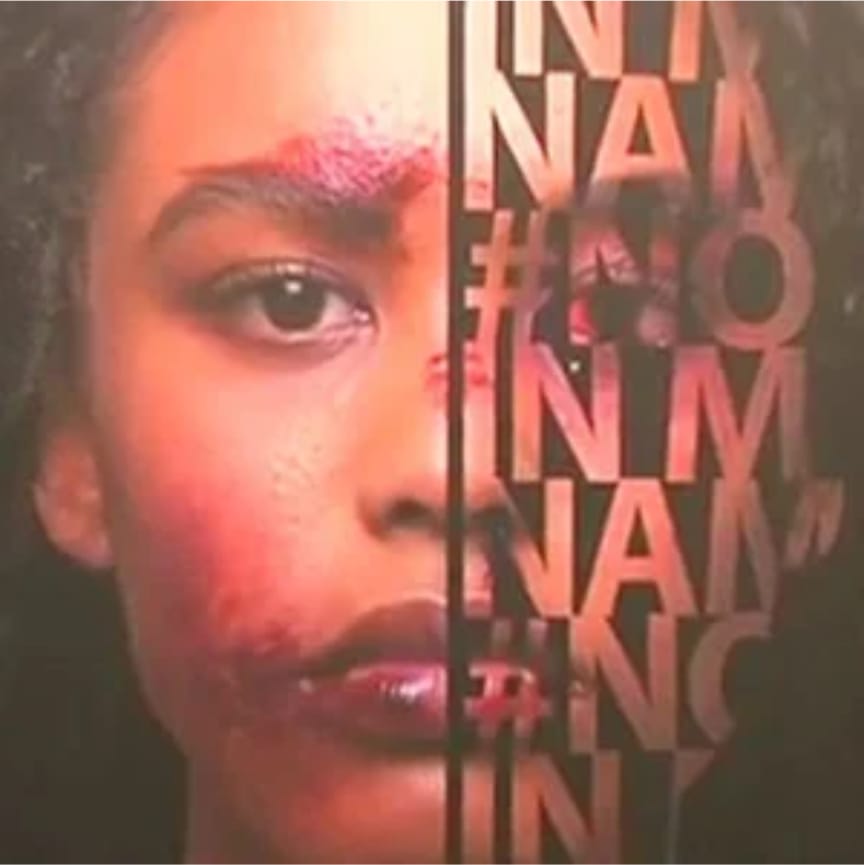
Revisiting Battered Woman Syndrome in Kenya
Ruth Kamande v Republic and the Search for Trauma-Informed Justice
Violence rarely begins with a single act. It builds slowly. It settles into homes quietly, behind closed doors, normalizing fear, humiliation, and survival. By the time criminal law intervenes, it often isolates one tragic moment and evaluates it in isolation, detached from the years of violence that may have preceded it.
The Supreme Court’s decision in Ruth Kamande v Republic reignited an important conversation about how Kenyan law understands violence when a woman stands before the court not only as an accused person, but potentially as a survivor of prolonged abuse. In a unanimous decision, the Court rejected Ruth Kamande’s attempt to invoke Battered Woman Syndrome (BWS) at the final appellate stage, holding that new arguments cannot be introduced at the last hour, especially where they are unsupported by medical evidence, prior complaints of abuse, or sworn testimony subjected to cross-examination.
Procedurally, the Court’s reasoning was difficult to fault. Appeals are not opportunities to reconstruct factual foundations that were never laid at trial. The Court reaffirmed the traditional principles of self-defence in criminal law; the threat must be imminent, the response necessary, and the force proportionate.
Yet even as the judgment closed one legal chapter, it opened a broader societal and jurisprudential question. Was this merely a cold and calculated killing, or was it a trauma response that the justice system failed to fully interrogate in time?
To answer that question responsibly, one must first understand what Battered Woman Syndrome actually means.
Battered Woman Syndrome is not a licence for violence, nor is it an automatic excuse for criminal conduct. It is better understood as a psychological and evidentiary framework used to explain how prolonged domestic abuse can fundamentally alter a survivor’s perception of danger, fear, and survival. A person exposed to repeated violence may perceive threats differently from someone who has never lived under sustained abuse. Trauma changes the way danger is processed. What may appear calm to an outsider may, to a survivor, feel like the final moments before another assault.
The difficulty lies in how the law traditionally understands self-defence. Under Kenyan criminal law, self-defence requires imminence, necessity, and proportionality. The threat must be immediate. The response must not exceed the danger faced. These principles evolved around conventional confrontational violence: a visible aggressor, a direct attack, a sudden threat. But domestic abuse rarely follows neat legal timelines. It is often cyclical, psychological, cumulative, and deeply controlling.
In its judgment, the Supreme Court suggested that Battered Woman Syndrome operates secondary to the defence of self-defence. In essence, BWS is not treated as an independent defence, but rather as evidence that may assist the court in assessing whether the elements of self-defence have been satisfied. Doctrinally, this position aligns with many common law jurisdictions. Yet it also exposes a deeper tension within criminal law itself.
If courts continue interpreting imminence and proportionality through rigid traditional lenses, then the law risks becoming formally neutral while substantively blind to the realities of gendered violence. The issue is therefore not necessarily whether Battered Woman Syndrome should exist as a standalone defence, but whether self-defence itself must evolve through a more contextual and trauma-informed interpretation.
This conversation cannot be divorced from Kenya’s current reality. Cases of gender-based violence and femicide continue to rise at deeply alarming levels. Almost weekly, the country is confronted with stories of women assaulted, killed, stalked, or psychologically tormented by intimate partners. Yet long before the final tragedy, there are usually ignored warning signs, repeated assaults, prior reports, and failed interventions.
In my own work representing women in conflict with the law, one pattern emerges repeatedly, many cases involving intimate partners carry long histories of domestic abuse that rarely receive meaningful attention in criminal proceedings. By the time a woman appears before a court accused of violence, the years of fear, coercion, and survival have often been reduced to background information, while the justice system focuses almost entirely on the final act.
One particular case continues to linger in my mind. A young woman accused of causing the death of her partner was ultimately charged with manslaughter rather than murder after investigations revealed a sustained pattern of violence and abuse perpetrated against her by the deceased. The decision to prefer a lesser charge was, in many respects, legally and morally sensible. It reflected an acknowledgment that context mattered and that prolonged abuse could not simply be ignored.
But even then, an uncomfortable question remained: was that enough?
Where a woman has endured years of violence, repeated assaults, and systemic failure of protection mechanisms, is criminal prosecution alone truly the measure of justice? Does merely reducing the charge sufficiently confront the deeper institutional failures that allowed the abuse to escalate unchecked? Or are we simply softening punishment without meaningfully addressing the reality of survival-based responses to violence?
Kenyan jurisprudence itself has previously demonstrated a more contextual approach. In the landmark case of Republic v Truphena Ndonga Aswani [2021], the High Court in Siaya sentenced fourty nine (49) year old, Truphena Ndonga Aswani to a one (1) day non-custodial sentence after she pleaded guilty to manslaughter for killing her abusive husband.
The facts were deeply troubling. On the night of the incident, her husband reportedly returned home intoxicated, violently demanded a land title deed, armed himself with a panga, and attempted to attack her. In defending herself, Truphena overpowered him and fatally injured him. During mitigation, evidence emerged showing years of severe domestic abuse. She had previously been hospitalized due to beatings. The deceased’s earlier wives had reportedly fled the marriage because of the same violence.
Justice Roselyne Aburili recognized that the accused was not simply an offender in the ordinary sense, but a survivor who had endured prolonged abuse until her life was directly threatened. Rather than impose imprisonment, the Court ordered her to serve a one-day sentence within the courtroom itself and emphasized that she required psychological trauma counselling more than incarceration. In a powerful warning on domestic violence, the Court urged victims to seek safety before violence escalates irreversibly.
Cases like Truphena Ndonga Aswani illustrate that contextual justice is possible. They demonstrate that courts are capable of recognizing the intersection between prolonged abuse, trauma, and criminal responsibility without abandoning accountability altogether.
At the same time, these cases also expose broader systemic failures. Kenya already has a legislative framework under the Protection Against Domestic Violence Act, 2015 (PADVA), yet public awareness and implementation remain weak. The Act provides significant safeguards, including protection orders, emergency relief, exclusion orders requiring perpetrators to vacate shared homes, and mechanisms designed to intervene before violence escalates. Yet many survivors remain unaware of these protections, while institutions continue treating domestic violence as a private family matter until tragedy occurs.
This is where all actors within the justice system must do better. Defence counsel must proactively place histories of abuse before the court at the earliest opportunity, especially where there are police reports, medical records, prior complaints, or witnesses to repeated violence. Prosecutors and investigators must approach intimate partner violence cases with greater sensitivity to patterns of coercive control and trauma. Courts, too, must continue developing constitutional interpretations of self-defence that meaningfully account for lived realities without undermining the rule of law.
Revisiting Battered Woman Syndrome is therefore not about excusing unlawful violence or diminishing accountability. It is about asking whether our justice system is sufficiently equipped to understand violence in its full chronology, particularly where women who stand accused were themselves repeatedly failed by the systems meant to protect them.
Justice cannot merely ask what happened in the final moment. It must also ask what happened long before it.
Waku Wesley
Advocate of the High Court of Kenya
Legal Aid Advocate
Justice Nest








Leave a comment